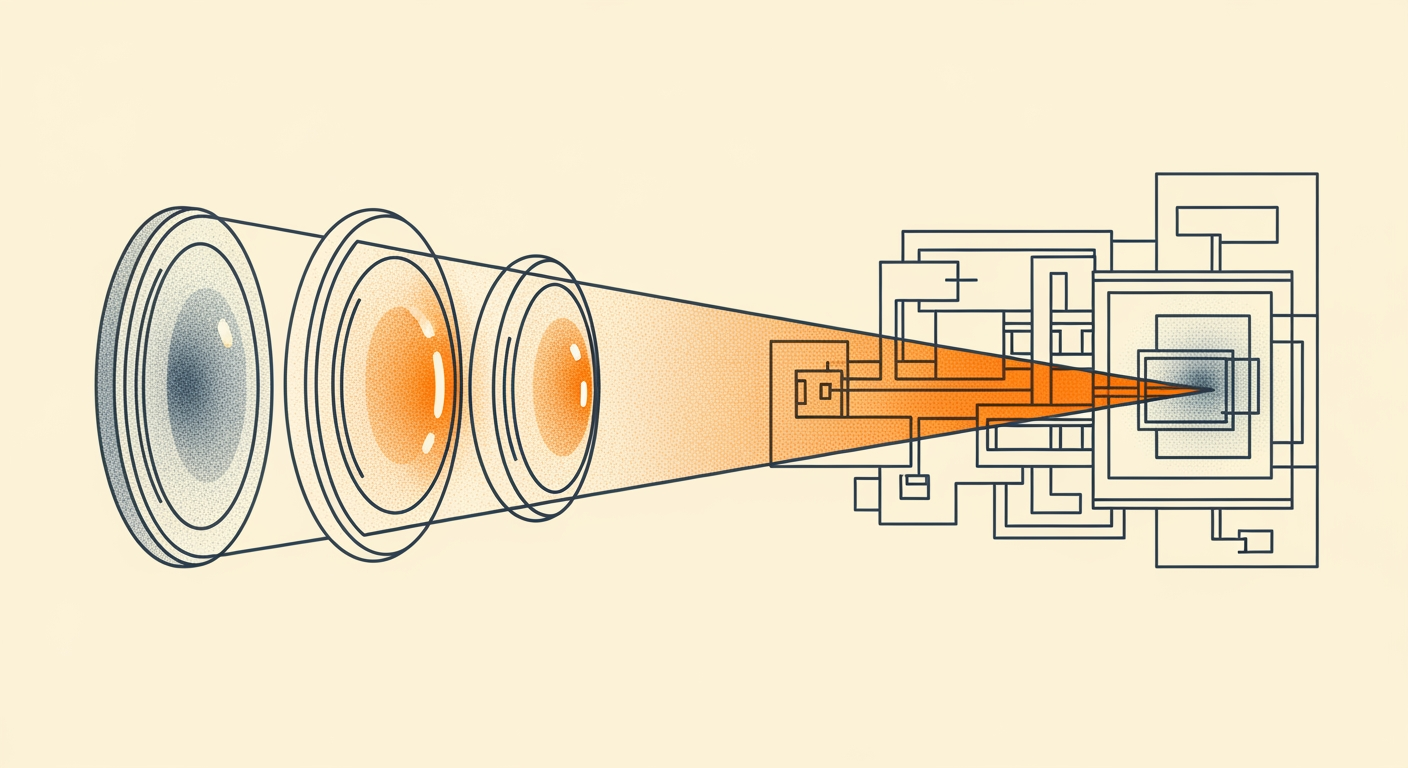
The reason threat models gather dust is that doing them well is slow, and doing them with every relevant framework is slower still. Aribot's answer is to collapse the cost: take your architecture, run the major threat frameworks against it in a single pass, and refresh as the system evolves. The model stops being a workshop and becomes a property of the system.
Watch the full AI Threat Modelling walkthrough
More on the Ayurak AI channel.
Start from the architecture, not a blank page
Aribot reconstructs your system as a connected topology — components, trust boundaries, data flows — from diagrams, infrastructure definitions, or a natural-language description. That reconstruction is the foundation: every threat is reasoned against the actual shape of your system, including which services talk to which, and what data crosses each boundary.
Three lenses, one pass
STRIDE — per-component threats
For each component and data flow, Aribot enumerates the classic STRIDE categories — spoofing, tampering, repudiation, information disclosure, denial of service, elevation of privilege. This is the bread-and-butter view that catches the per-element weaknesses a design review should surface.
MITRE ATT&CK — how adversaries actually operate
STRIDE tells you what could go wrong with a component. ATT&CK tells you how a real adversary would chain those weaknesses into an operation. Mapping to ATT&CK techniques turns a list of component flaws into a picture of plausible attacker behaviour across your system.
MAESTRO — the agentic-AI dimension
Systems that embed LLMs and autonomous agents carry risks the older frameworks never modelled — prompt injection, tool misuse, unsafe autonomy. MAESTRO, the agentic-AI threat-modelling framework from the Cloud Security Alliance, covers that ground. Running it alongside STRIDE and ATT&CK means the AI parts of your architecture get examined with a lens built for them, not retrofitted from a pre-LLM model.
Per-component threat enumeration across six classic categories.
Real adversary tactics and techniques chained across the system.
Agentic-AI risks — prompt injection, tool misuse, unsafe autonomy.
Threats that connect to everything else
A threat in isolation is just a note. Aribot links each threat to the security requirements and control mappings it implies, and to the code-level findings that relate to it — so the model isn't a document parallel to the work, it's wired into it. An engineer can move from an architectural threat to the requirement that addresses it to the finding that proves it open, without crossing three disconnected tools.
Alive, not frozen
Because the model is generated from the architecture, it refreshes when the architecture changes. Add a service and the threat surface updates; the model doesn't wait for next year's workshop. That is the property that keeps a threat model out of the dustbin — it is recomputed, not rewritten.
Running three frameworks by hand is three times the cost that made threat modelling a one-off. Collapsing them into a single automated pass is what makes “model every change” economically possible instead of aspirational.
For the why behind all this — the reason most threat models quietly rot — read the companion piece.
Why threat models gather dust