Your security team didn't sign up to become spreadsheet operators. Yet compliance audit preparation consumes an average of 4,300 engineering hours per year at mid-size companies. What if every security finding automatically mapped to the controls it satisfies — across every framework you need?
The Compliance Nightmare, Quantified
Let's start with the scope of the problem. A company pursuing multi-framework compliance faces an overwhelming matrix of controls:
- ISO 27001:2022 — 93 controls across 4 themes (Organizational, People, Physical, Technological)
- SOC 2 Type II — 5 Trust Service Criteria with dozens of specific points of focus, requiring 12 months of continuous evidence
- PCI DSS v4.0 — 300+ sub-requirements across 12 principal requirements, with the most prescriptive testing procedures in the industry
- NIST Cybersecurity Framework 2.0 — 108 subcategories across 6 functions (Govern, Identify, Protect, Detect, Respond, Recover)
- EU AI Act — A new frontier with risk classification requirements, transparency obligations, and technical documentation mandates that most organizations haven't even begun to map
The overlap between these frameworks is significant — an estimated 60-70% of controls address similar concerns. But mapping that overlap manually requires deep expertise in each framework and hundreds of hours of cross-referencing.
Most organizations solve this with spreadsheets. Massive, color-coded spreadsheets maintained by GRC teams who spend their days copying evidence between tabs and hoping nothing falls through the cracks before the next audit.
What If Compliance Was a Byproduct?
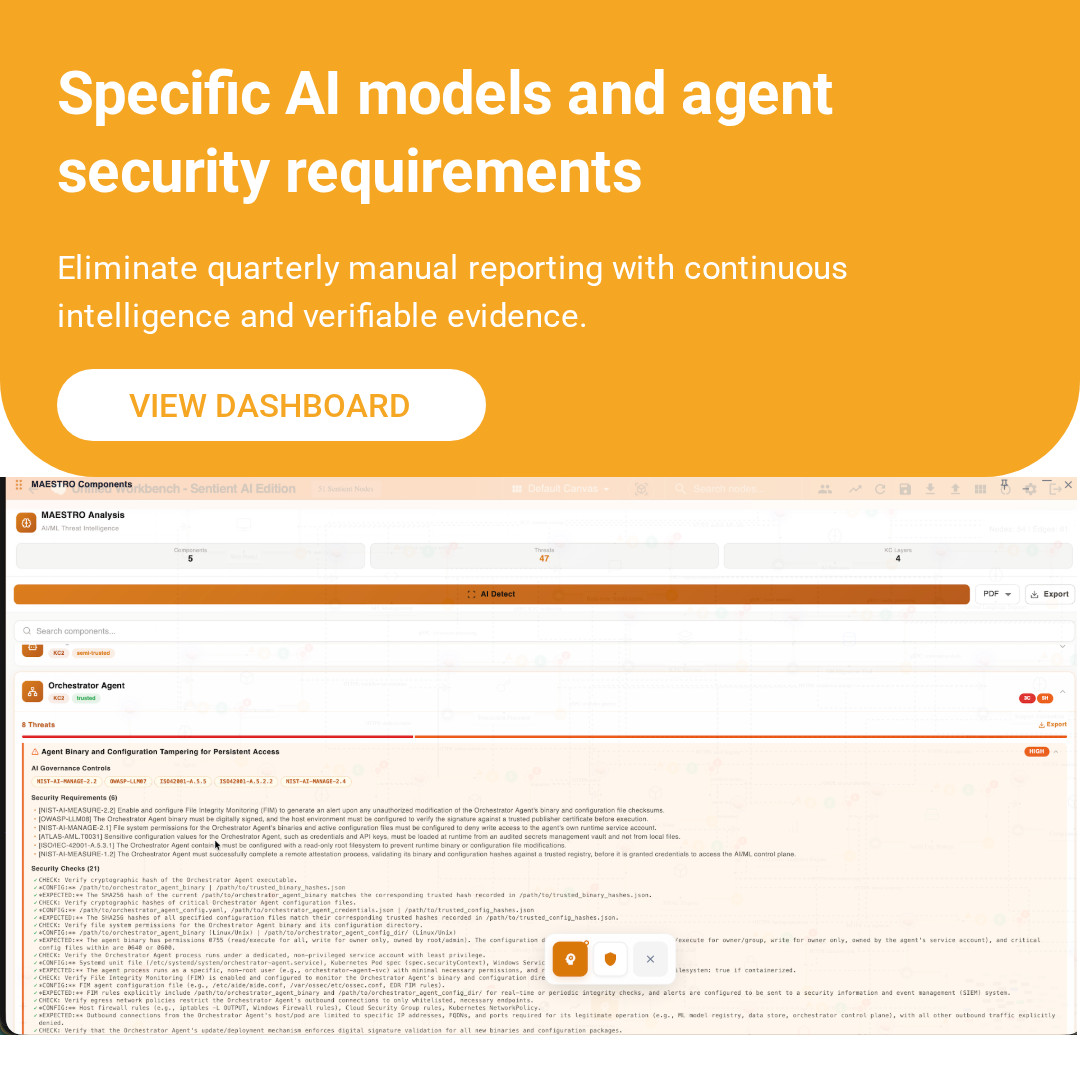
Ayurak's compliance automation doesn't start with frameworks. It starts with security findings. Every vulnerability discovered, every control implemented, every architectural decision documented — each one automatically maps to the compliance controls it satisfies across every framework you've enabled.
Compliance becomes a byproduct of doing security well, not a separate workstream that competes for engineering time.
How the Mapping Actually Works
Code-Level Findings → CWE → Framework Controls
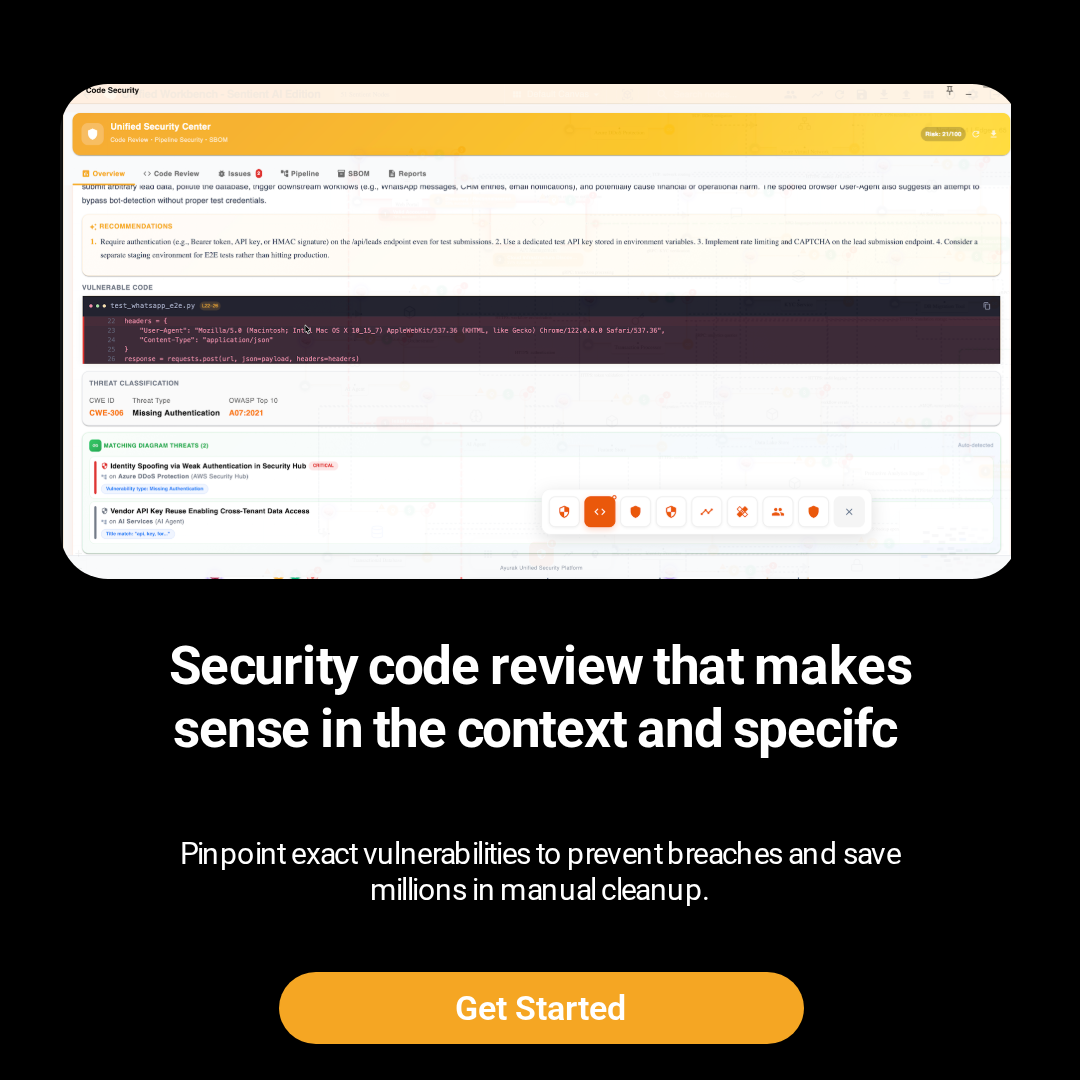
When a code-level finding is identified (whether from Ayurak's own analysis or imported from tools like SonarQube), it's tagged with a CWE (Common Weakness Enumeration) identifier. This CWE becomes the bridge between the technical finding and compliance controls.
For example, consider a SQL injection finding:
Finding: SQL Injection in /api/users endpoint
→ CWE-89: Improper Neutralization of Special Elements in SQL Command
  → ISO 27001: A.8.26 (Application Security Requirements)
  → SOC 2: CC6.1 (Logical and Physical Access Controls)
  → PCI DSS v4: 6.2.4 (Software Engineering Techniques to Prevent Injection)
  → NIST CSF: PR.DS-1 (Data-at-Rest Protection)
  → EU AI Act: Article 15 (Accuracy, Robustness, Cybersecurity)
One finding, five framework mappings, zero manual work. The CWE taxonomy serves as a universal rosetta stone between technical reality and regulatory language.
Architecture-Level Findings
Architecture findings from threat modeling and attack path simulation map differently. A missing trust boundary between an API gateway and a database doesn't have a CWE — it's a design flaw. Ayurak maps these through MITRE ATT&CK techniques to compliance controls:
- Missing network segmentation → T1021 (Remote Services) → ISO 27001 A.8.22 (Segregation of Networks) → PCI DSS 1.3 (Network access controls)
- Unencrypted data flow → T1040 (Network Sniffing) → ISO 27001 A.8.24 (Use of Cryptography) → SOC 2 CC6.7 (Encryption)
Cloud Configuration Findings
Cloud misconfigurations — public S3 buckets, overly permissive IAM roles, unencrypted databases — map through CIS Benchmark identifiers to compliance controls. Ayurak maintains mappings for:
- AWS: 250+ CIS benchmark checks → framework controls
- Azure: 200+ CIS benchmark checks → framework controls
- GCP: 180+ CIS benchmark checks → framework controls
Each cloud finding automatically populates the relevant compliance control evidence, with timestamps, severity levels, and remediation status tracked across the lifecycle.
AI/ML-Specific Findings
This is where Ayurak's compliance mapping goes beyond what traditional tools offer. AI-specific findings — prompt injection vulnerabilities, model bias metrics, training data provenance gaps, shadow AI usage — map to the EU AI Act and emerging AI governance standards:
- Prompt injection vulnerability → EU AI Act Article 15 (Cybersecurity)
- Missing model documentation → EU AI Act Article 11 (Technical Documentation)
- No bias testing → EU AI Act Article 10 (Data Governance)
- Shadow AI discovery → EU AI Act Article 26 (Obligations of Deployers)
As the regulatory landscape for AI evolves, Ayurak's framework mappings update automatically. Your compliance posture stays current without manual re-mapping.
From "Fill Out the Spreadsheet" to "Check the Dashboard"
The transformation in workflow is dramatic:
Before Ayurak
- Security team runs scans, generates reports in PDF format
- GRC analyst opens the 47-tab compliance spreadsheet
- Analyst manually reads each finding and determines which controls it maps to
- Analyst copies evidence into the correct tab for each framework
- Auditor requests additional evidence; analyst scrambles to find it
- Process repeats for each framework, each quarter
After Ayurak
- Security findings automatically populate compliance dashboards in real time
- Each control shows its evidence chain, coverage percentage, and gap analysis
- Auditor accesses a read-only dashboard with traceable evidence
- Gaps are highlighted proactively with prioritized remediation recommendations
- Cross-framework overlap is surfaced — fix once, satisfy many
The Evidence Chain
Auditors don't just want to know that a control is satisfied — they want to trace the evidence. Ayurak provides a six-step evidence chain for every compliance mapping:
- Finding source: Where was this discovered? (Threat model, code scan, attack simulation, cloud config check)
- Technical classification: CWE, MITRE ATT&CK technique, or CIS benchmark identifier
- Control mapping: Which specific control in which framework does this satisfy or violate?
- Current status: Open, mitigated, accepted risk, or compensating control in place
- Remediation evidence: What was done to address it? (Code commit, architecture change, policy update)
- Verification: How was the fix verified? (Re-scan results, simulation re-run, manual validation)
This chain is immutable and timestamped. Auditors can trace any control from framework requirement to technical evidence without leaving the platform.
What About Custom Controls?
Not every organization maps to standard frameworks alone. Many have internal security policies, industry-specific requirements, or customer contractual obligations that go beyond ISO/SOC/PCI.
Ayurak supports custom control frameworks. Define your internal controls, map them to CWE/MITRE/CIS identifiers, and they'll be populated with evidence automatically — just like standard frameworks. Customer security questionnaires become a matter of exporting the relevant dashboard rather than a week-long research project.
The Time Savings Are Real
Across our customer base, the numbers are consistent:
- 70% reduction in audit preparation time — from weeks to days
- 85% reduction in manual evidence collection — from spreadsheet archaeology to dashboard exports
- 90% reduction in cross-framework mapping effort — automated overlap detection eliminates redundant work
- 50% reduction in audit findings — because continuous compliance catches gaps before auditors do
For a mid-size company, this translates to approximately 3,000 engineering hours per year redirected from compliance paperwork to actual security improvement. That's the equivalent of 1.5 full-time senior engineers doing productive work instead of filling spreadsheets.
The Philosophical Shift
The deepest value of automated compliance mapping isn't the time savings — it's the shift from compliance theater to real security.
When compliance is a manual, periodic exercise, organizations optimize for passing audits rather than being secure. Controls exist on paper but not in practice. Evidence is manufactured rather than observed. The audit becomes a performance rather than a validation.
When compliance is automated and continuous, the incentive structure inverts. Improving actual security automatically improves compliance posture. Fixing a real vulnerability automatically generates compliance evidence. The audit becomes a formality because the dashboard already shows continuous control effectiveness.
"Our auditor said it was the first time in 15 years they'd seen a company where the compliance documentation was more accurate than the interview answers. Usually it's the other way around." — CISO, Healthcare SaaS
That's the goal: make the documentation reflect reality so perfectly that compliance becomes indistinguishable from good security practice.
See Compliance Automation in Action
Watch a single security finding automatically map across ISO 27001, SOC 2, PCI DSS v4, NIST CSF, and the EU AI Act — with full evidence chains that auditors can trace end to end.
See Compliance Automation in Action