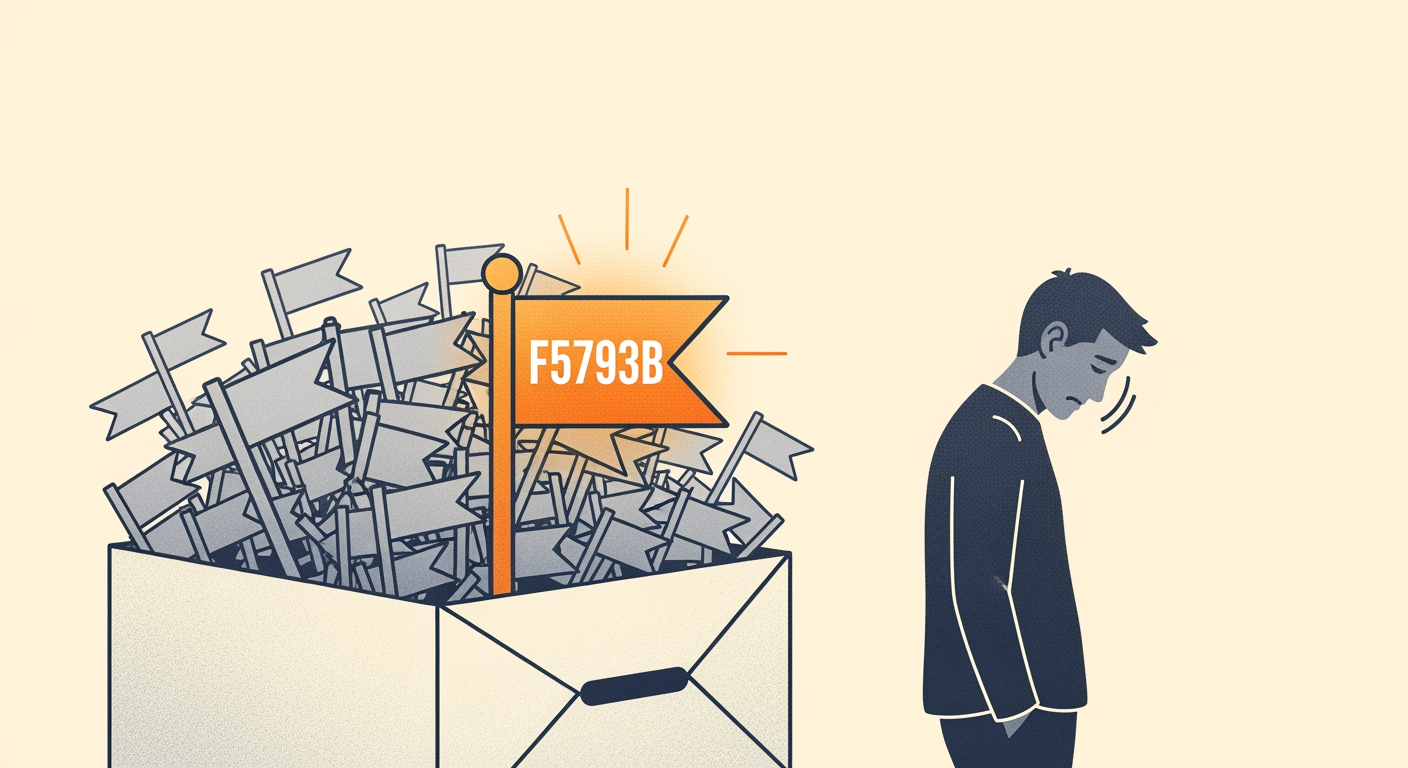
There is a quiet crisis in application security, and it isn't a lack of findings. It's the opposite. Scanners produce so much noise — so many findings that turn out not to matter — that developers have rationally learned to ignore them. A tool that is right 7% of the time has trained its users to treat it as wrong.
Aribot — AI Code Review (Immersive Demo)
More on the Ayurak AI channel.
The trust collapse
Trust in a security tool is a budget, and false positives spend it. The first few times a developer chases a finding to a dead end, they're diligent. After the twentieth, they start skimming. After the hundredth, the security backlog is a place findings go to be ignored. The real vulnerability, sitting in the same list as the noise, gets the same shrug as everything else. The tool didn't fail to find it. The process failed to act on it.
Why traditional scanners are so noisy
They read code, not context
A static analyser sees a pattern — unsanitised input, a risky function call — and flags it. What it can't see is whether that pattern is reachable, whether it sits behind authentication, or whether it touches anything sensitive. A textbook-dangerous call on an unreachable internal path gets the same red flag as a genuine hole on your front door.
They have no architecture
Severity, in most tools, is a property of the finding alone. But risk is a property of the finding in your system — its place in the topology, the trust boundary it sits behind, the data that can reach it. Without that context the scanner can't tell a five-alarm fire from a smoke-test, so it marks everything urgent and lets you sort it out.
They miss a whole class of AI risk
Worse, the same tools that over-flag conventional code often can't see AI-specific weaknesses at all — prompt injection, insecure model use, the risks catalogued in the OWASP Top 10 for LLM Applications and MITRE ATLAS. So teams get a flood of low-value conventional findings and a blind spot exactly where modern systems are most exposed.
False positives don't just waste time. They train your best engineers to distrust the one channel that's supposed to keep them safe. By the time a tool has cried wolf a hundred times, its true positives are indistinguishable from its noise — and that is a more dangerous state than having no scanner at all.
The fix is context, not volume
Cutting the noise doesn't mean finding less. It means connecting each finding to the thing that determines whether it matters: the architecture, the threats, the attack paths. A finding that sits on a real path to sensitive data is a priority. One that doesn't is a note. When the tool can tell the difference, developers start trusting it again — and the real issues get fixed because they're no longer buried.
The companion piece shows how Aribot's architecture-aware, agentic code review cuts the noise — and ships fixes as pull requests instead of handing you another report.
Agentic code review that ships fixes