The average enterprise security team runs nine application security tools. SAST, DAST, SCA, secrets scanning, container scanning, IaC scanning, API security, threat modeling, and a vulnerability management platform to aggregate it all. Total licensing cost: $180K or more per year. And after all that investment, when the board asks "what is our risk posture?", the CISO still can't give a confident answer.
The Context Death Problem
Every security tool generates findings. Each finding has some context — a file path, a severity score, a CWE identifier. But that context is local to the tool. It doesn't travel.
When findings move from your SAST tool to your vulnerability management platform, they lose the architectural context. When they move from your threat modeling tool to Jira, they lose the attack path context. When they move from your SCA tool to your SIEM, they lose the exploitability context.
Context dies at tool boundaries. And security without context is just noise.
The industry has tried to solve this with integrations — APIs, webhooks, SARIF files, and vulnerability management platforms that aggregate findings from multiple sources. But aggregation isn't integration. Putting nine tools' findings into one dashboard doesn't create context. It creates a bigger dashboard with the same context-free findings.
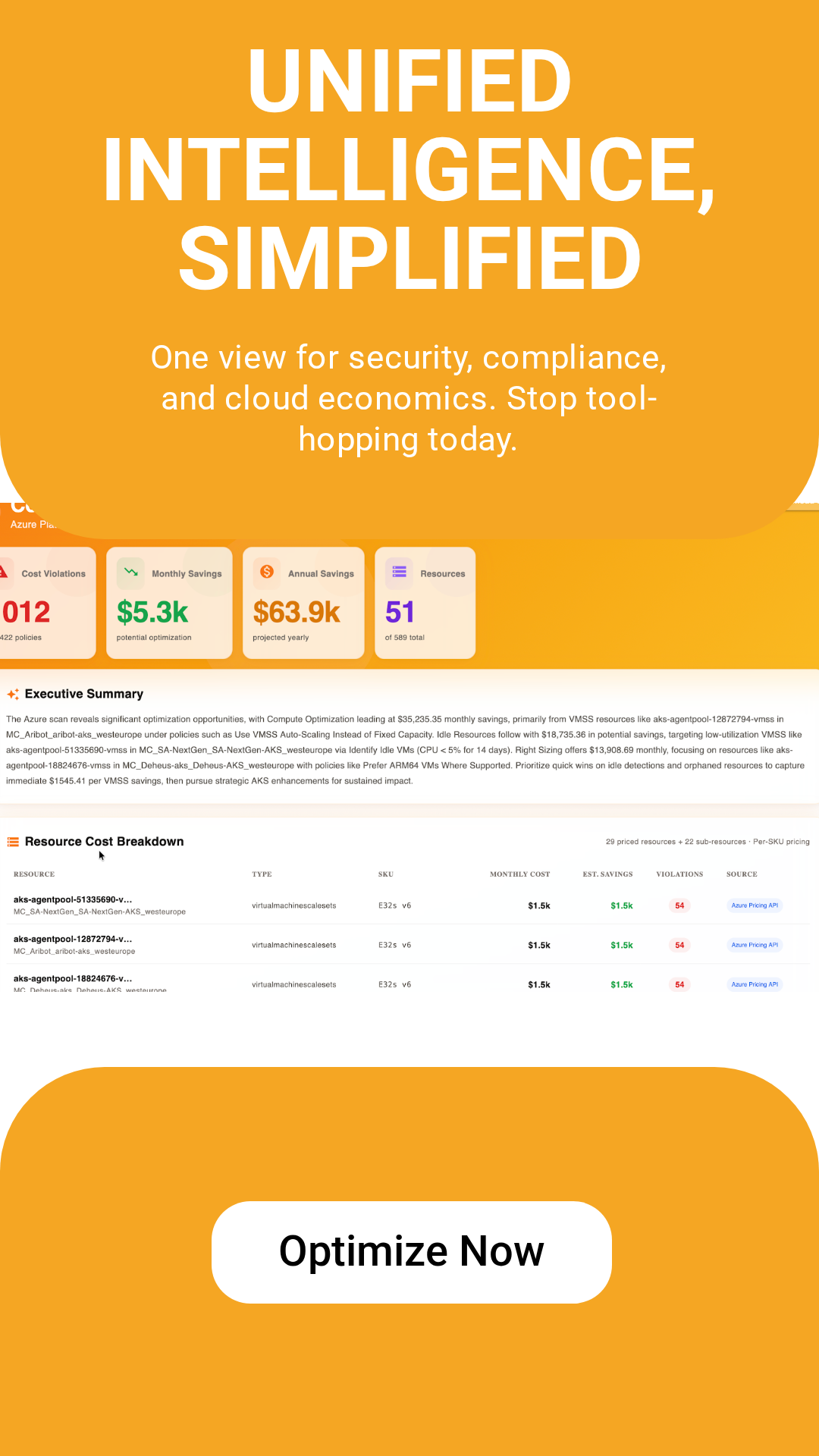
What "Unified" Actually Means
When we say "unified platform," we don't mean "we bought five companies and bolted their products together." We mean a single system where every capability shares the same data model, the same architecture representation, and the same context engine.
Here's the workflow from start to finish — in one platform:
Design → Threats
You model your application architecture. The platform generates a threat model based on the components, data flows, and trust boundaries. Each threat is linked to the architectural component it targets. No export. No separate tool. The threat model lives alongside the architecture it describes.
Threats → Code
The threat model generates expected vulnerability patterns. When code review runs, findings are automatically mapped to threats. A SQL injection finding in the payment component isn't just CWE-89 — it's evidence that Threat T-9 (data exfiltration through payment API) has an unmitigated code path. The mapping is automatic because the architecture, the threats, and the code all live in the same system.
Code → Shadow AI
The same code analysis that finds traditional vulnerabilities also discovers AI integrations — SDK imports, API keys, model endpoints, prompt templates. These are automatically classified and added to the AI registry. No separate Shadow AI tool needed. The code scanner already understands your codebase.
Shadow AI → Compliance
Discovered AI integrations are automatically evaluated against the EU AI Act, NIST AI RMF, and your organization's AI governance policy. Risk classifications, data flow mappings, and compliance gaps are generated from the same data — no manual re-entry, no spreadsheet mapping.
Compliance → Reports
Compliance evidence is generated continuously — not assembled frantically before an audit. Every threat has a status. Every finding has a remediation timeline. Every AI integration has a governance classification. Reports pull from live data, not stale snapshots.
Why CISOs Love This
CISOs live in the gap between technical detail and board-level communication. They need to translate "we have 2,347 SAST findings" into "here are the three things that could actually hurt us."
A unified platform makes this translation automatic:
- Risk posture dashboard — Not a finding count, but a threat-level view. "12 architectural threats identified. 8 fully mitigated. 3 partially mitigated. 1 unmitigated (Critical)."
- Trend lines that mean something — "Threat coverage improved from 60% to 85% this quarter" is actionable. "We closed 400 findings" is not — because nobody knows if those 400 findings mattered.
- Audit readiness at all times — Compliance evidence is a live query, not a quarterly data-gathering exercise. When the auditor asks for evidence of threat mitigation, it's one click away.
- Board-ready reporting — Risk posture expressed in business terms: which products are at risk, what regulatory exposure exists, and what the remediation timeline looks like.
Why Developers Love This
Developers hate security tools. Not because they don't care about security, but because most security tools are designed for security teams and retrofitted for developer workflows. The result is noisy PR comments, context-free findings, and tools that slow down the pipeline without adding visible value.
A unified platform changes the developer experience:
- One tool, not nine — Developers interact with a single system. No context-switching between SAST results in one dashboard, SCA results in another, and secrets findings in a third.
- Findings with context — Every finding explainswhy it matters — the threat it enables, the attack path, the compliance control it violates. Developers fix contextual findings 60% faster than context-free ones.
- Fix suggestions that work — The platform knows your codebase, your frameworks, and your existing patterns. Fix suggestions use your actual utilities, your actual middleware, your actual patterns. Not generic "use parameterized queries" advice.
- No false-positive fatigue — Architecture-aware review suppresses findings that aren't exploitable in your specific context. Developers trust the findings because the findings are trustworthy.
The Economic Argument
Beyond the security benefits, the economics of consolidation are compelling. Here's what organizations typically see after moving to a unified platform:
Tool Consolidation
Nine tools at an average of $20K each equals $180K in annual licensing. A unified platform replaces the majority of these with a single license. But the licensing cost is often the smallest saving — integration maintenance, training, and context-switching costs dwarf the license fees.
- License savings: 40–60% reduction in security tooling spend
- Integration maintenance: Elimination of custom integrations between tools that break with every version update
- Training costs: One platform to learn instead of nine — faster onboarding for new security engineers
Triage Efficiency
With architecture-aware review suppressing false positives and threat mapping providing prioritization context, triage time drops dramatically. Security engineers spend time on investigation and remediation guidance instead of determining whether findings are real.
- Triage time reduction: 70–80% (from minutes per finding to seconds)
- Security engineering capacity recovered: 50–70% (redirected from triage to proactive security)
Developer Productivity
False positives don't just waste security engineering time — they waste developer time. Every false positive that a developer investigates is time not spent building product features.
- Developer time saved: 3–5 hours per developer per month (previously spent investigating false positives and context-switching between security tools)
- MTTR improvement: 40–60% (contextual findings get fixed faster)
Audit Preparation
The most surprising saving is in audit prep. Organizations typically spend 2–4 weeks assembling compliance evidence before a SOC 2, ISO 27001, or HIPAA audit. With continuous compliance evidence generation, this drops to hours.
- Audit prep time reduction: 80–90%
- Audit finding risk: Significantly reduced (evidence is always current, not stale)
Incident Response
When a zero-day drops, the first question is "are we affected?" With nine disconnected tools, answering this question takes hours of cross-referencing. With a unified platform, it's a single query: "Show me every component that uses this library, what threats they're exposed to, and what data they handle."
- Zero-day impact assessment: Hours → minutes
- Mean time to containment: Reduced by 40–60%
The Uncomfortable Truth About Tool Sprawl
Tool sprawl isn't an accident. It's the natural result of how enterprises buy security software. Each tool was purchased to solve a specific problem, evaluated in isolation, and deployed independently. Nobody planned to have nine tools. It just happened, one procurement cycle at a time.
The uncomfortable truth is that more tools don't equal more security. After a certain point, adding tools actually reduces security effectiveness because:
- Alert fatigue increases with every new finding source
- Context fragmentation makes accurate prioritization impossible
- Integration maintenance consumes engineering time that should go to security work
- Developer trust erodes as noise increases from multiple competing tools
- Institutional knowledge becomes tool-specific — when an engineer leaves, their tribal knowledge of how to interpret Tool X's findings leaves with them
The solution isn't better integrations between fragmented tools. The solution is a platform where context never dies — because it never crosses a tool boundary in the first place.
What This Looks Like in Practice
A security engineer's morning with nine tools: check the SAST dashboard, cross-reference with the SCA findings, look up the affected component in the threat model (a separate document), check whether the finding is in scope for the upcoming audit (a spreadsheet), file a Jira ticket with context assembled from four different systems, and hope the developer has enough information to fix it.
A security engineer's morning with a unified platform: open the command center. See the three highest-risk unmitigated threats. Click into one. See the code findings, the attack path, the compliance impact, and the suggested fix — all on one screen. Assign it. Move on.
That's not a future vision. That's what our platform does today.
See the Unified Platform
Stop tab-switching between nine security tools. See how a unified platform connects threat models, code findings, Shadow AI discovery, and compliance evidence in a single command center.
See the Unified Platform