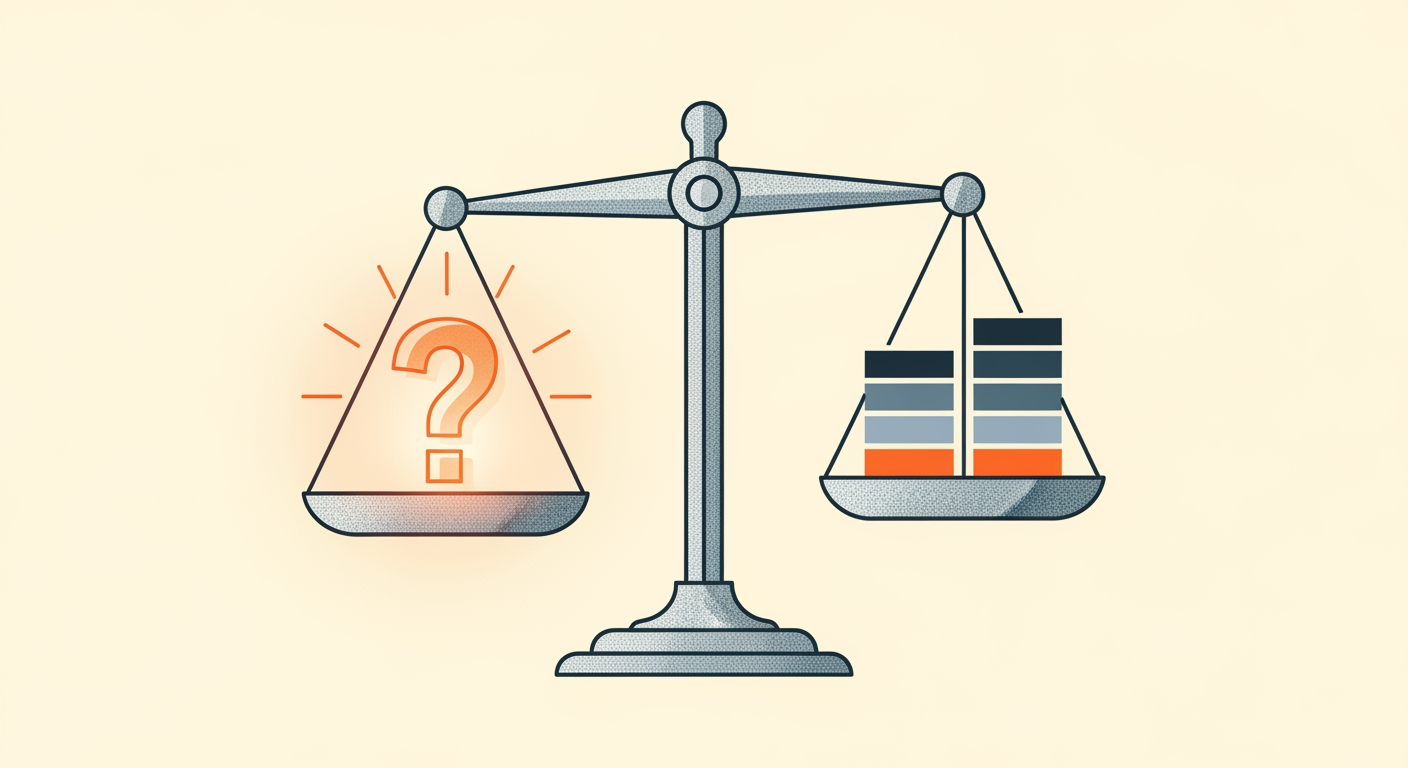
Every security budget is a bet about where the next incident will come from. Most are placed blind. The tooling produces volume — hundreds of findings, each marked “high” — but not the one thing a budget owner needs: which risks actually matter, in order, in money.
Aribot — Attack Simulation & War-Gaming (Immersive Demo)
More on the Ayurak AI channel.
The three questions a board actually asks
Strip away the jargon and security leadership is asked the same three questions every quarter: Where would we get hit first? What would it cost us? What are we actually doing about it? A list of 800 findings answers none of them. It describes symptoms without ranking them, and it never converts a technical severity into a number a CFO can reason about.
Why severity labels aren't priorities
Volume is not signal
When everything is “high,” nothing is. A flat list with no relationship to your architecture forces teams to triage by gut feel, which means the loudest finding wins rather than the most dangerous one. The work gets done in the wrong order, and the budget follows.
Severity ignores reachability
A critical-rated weakness on a component no attacker can reach matters less than a medium-rated one on the exposed path to your crown jewels. Severity is a property of a finding in isolation. Priority is a property of a finding in your system. Tools that only know the first can't produce the second.
Nothing is priced
“Critical” is not a currency. Until a risk is expressed as expected cost — what a breach down this path would actually run, and how much of that is recoverable — it cannot be compared against the cost of fixing it. Without that, prioritisation is vibes, and budget defence is an argument you lose to whoever speaks most confidently.
When risk can't be seen or priced, two failures follow. You overspend on the visible and loud while the genuinely dangerous path stays open. And you can't defend the budget you do have, because “trust me, it's important” is not a business case. The tax is paid in both wasted spend and unfunded exposure.
Risk you can see, you can fund
The way out is to make risk legible before it becomes an incident: model how an attacker would actually move through your architecture, find the few choke points that sit on the most paths, and put a dollar figure on what each one is worth to close. That turns a wall of findings into a short, ranked, priced list — the form a budget conversation can actually use.
The companion piece shows how Aribot does it — Monte Carlo attack simulation across adversary profiles, choke-point economics, and a costed path to green.
How we war-game attacks