Knowing you have risk is easy. Knowing which risk to fund first is the whole game. Aribot answers it the way an actuary would — not with a single guess but with thousands of simulated attacks, run against your real architecture, scored by how often each path succeeds and what it would cost if it did.
Watch the full Attack Simulation & War-Gaming walkthrough
More on the Ayurak AI channel.
Step 1 — Model the battlefield
Aribot builds an attack graph from your architecture: components, the connections between them, the entry points an attacker could start from, and the high-value targets they'd aim for. Because this is design-time analysis, it doesn't rely on a live CVE feed — it maps each component type to the relevant adversary techniques, so it works on a system that hasn't even been built yet.
Step 2 — Simulate, thousands of times
Rather than reasoning about a single “worst case,” Aribot runs a Monte Carlo simulation — thousands of iterations in which each step of an attack succeeds or fails according to its probability, and the time-to-compromise is sampled from realistic distributions. Run it five thousand times and you get something a single walkthrough can never give you: a distribution. Which paths succeed often, which rarely, and how long each takes.
Across adversary profiles
A bored opportunist and a well-resourced, patient adversary do not move through your system the same way. Aribot runs the simulation across multiple attacker profiles, scaling capability and persistence, so the picture reflects who might actually be coming for you rather than a single generic threat.
Step 3 — Find the choke points
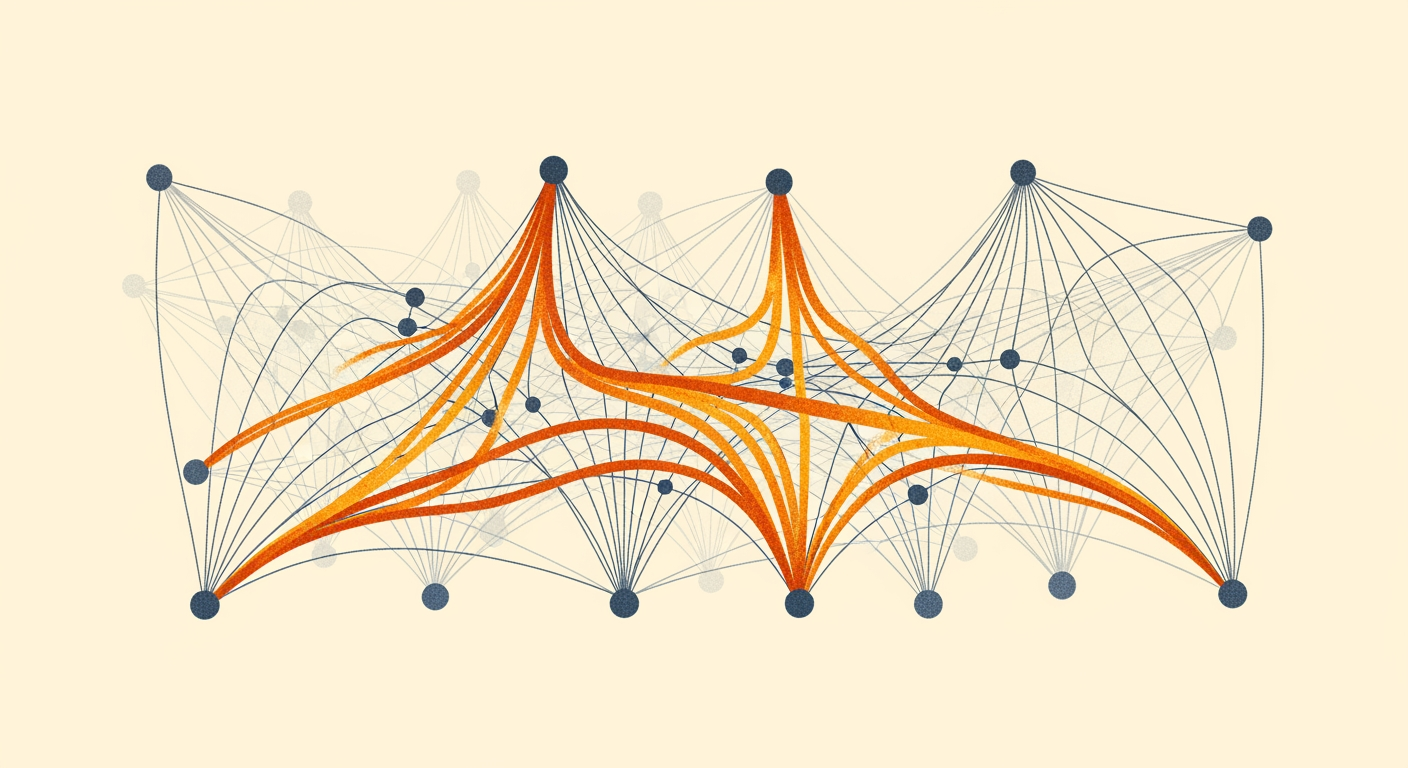
Once you have thousands of successful paths, the structure emerges: a small number of components sit on a disproportionate share of them. Those are the choke points — the nodes where one fix collapses many attack paths at once. This is how 800 findings become eight decisions. You stop patching leaves and start cutting the branches.
A checklist treats every item as equal. A choke-point analysis ranks fixes by how much attack surface each one removes. Closing the node that sits on 60% of successful paths is worth more than clearing fifty findings that sit on none.
Step 4 — Price it, and chart the path to green
Each choke point carries an estimate of what an attack through it would cost and how much of that is recoverable, set against the cost to close it. That converts the simulation into the language a budget owner uses, and sequences the work into a phased roadmap — what to fix in the next 30, 90, and 365 days to move the overall posture from red to green. The board's three questions — where, how much, what now — each get an answer backed by evidence.
Design-time, not post-mortem
The quiet power of all this is timing. Because it works from architecture rather than running code, the war-game happens before the system ships — when fixing a flaw is a design change, not an incident. The most expensive vulnerabilities are decided at the whiteboard; this is how you catch them there.
New here? Start with why a wall of unranked, unpriced findings makes security budgeting a guess.
You can't budget for invisible risk