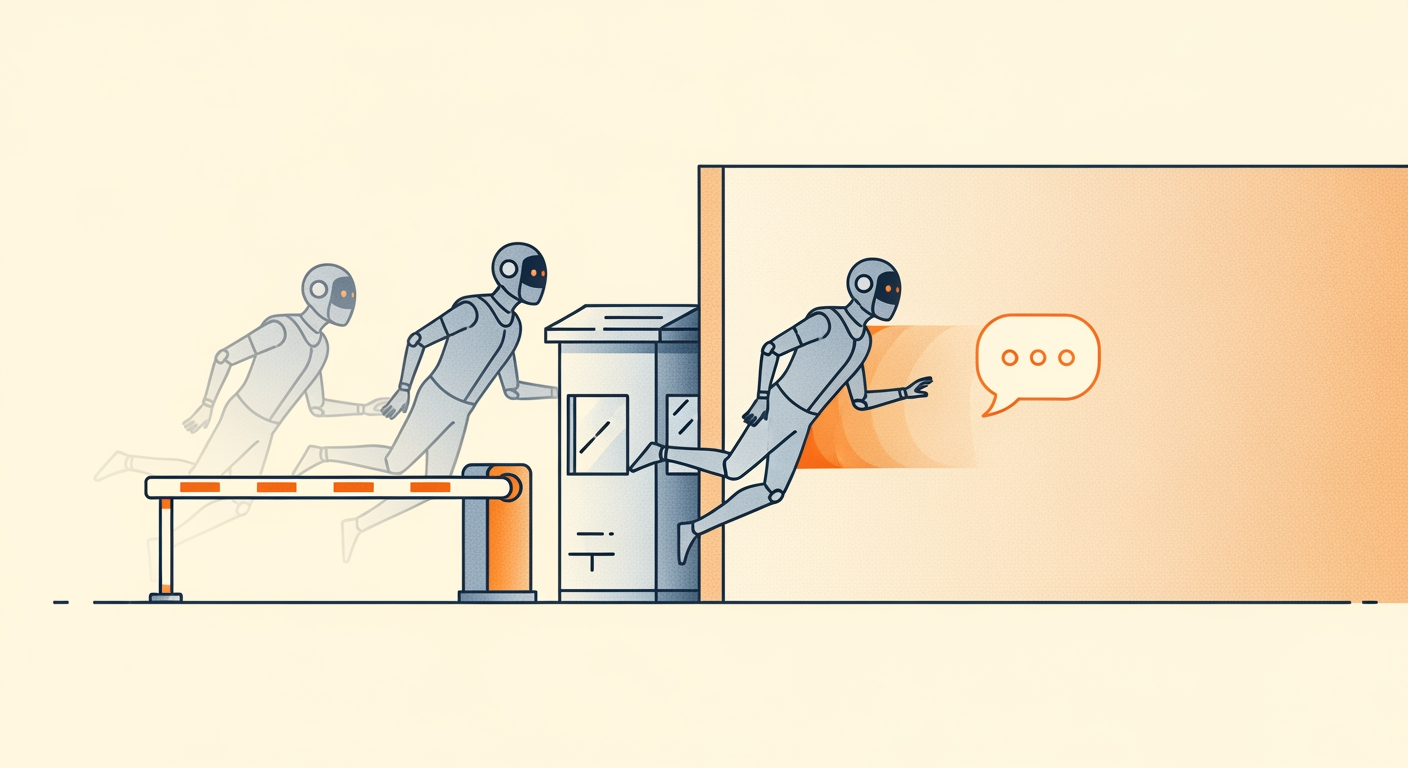
Ask a security leader how many AI tools their organisation uses and you will hear a confident, wrong number. The sanctioned list is short. The real list — every browser extension, every “helpful” assistant, every API key a developer wired in over a weekend — is long, growing, and almost entirely invisible to the controls you already paid for.
Aribot — Shadow AI Detection (Immersive Demo)
More on the Ayurak AI channel.
A familiar pattern, new clothes
We have seen this film before. Shadow IT — the SaaS apps and personal cloud accounts that proliferated faster than IT could catalogue them — taught a hard lesson: people route around friction. When the sanctioned tool is slower than the unsanctioned one, the unsanctioned one wins. AI has simply compressed the timeline. A developer can adopt a new model in the time it takes to paste an API key.
The difference this time is the payload. Shadow IT leaked files. Shadow AI leaks context — source code, customer records, contract text, incident detail — pasted into a prompt and, depending on the provider, retained, logged, or used to train. The data doesn't just sit in an unknown bucket. It leaves your boundary entirely.
Why your current tools miss it
CASB sees apps, not intent
A cloud access broker is good at spotting traffic to a known catalogue of services. New AI endpoints appear weekly, many fronted by generic cloud domains shared with services you do allow. The category “AI” is a moving target, and a static block-list is always a step behind.
DLP watches the wrong doors
Data-loss tooling is tuned for files and email. A prompt typed into a web textarea, or sent through a developer's API call, often doesn't look like the exfiltration patterns DLP was trained on. The sensitive data is there; the channel is one your DLP wasn't pointed at.
SSO logs only show the front door
Identity logs capture the tools people log into. They say nothing about the tool a developer reaches with a personal key, or the model embedded three layers deep in a dependency. The most exposed paths are precisely the ones that never touch your single sign-on.
You cannot write a policy for a tool you cannot see, and you cannot prove to a regulator that customer data stays inside your boundary if you don't know every place it can leave. Emerging AI governance expectations — from the EU AI Act to internal board oversight — start with an inventory most organisations cannot produce.
The cost of staying blind
Three risks compound while shadow AI goes uncatalogued. Data exposure: proprietary and regulated data crossing into third-party models with unknown retention. Compliance drift: processing that no data-protection assessment ever covered. Supply-chain surface: models and AI dependencies pulled in without review, widening an attack surface that already accounts for a fast-rising share of breaches. None of these announce themselves. They surface as an incident, an audit finding, or a headline.
Visibility comes first
Every credible AI governance framework follows the same opening move the cloud taught us: discover, then classify, then govern. You cannot skip to governance. The first deliverable is an honest map of where AI is actually being used across your environment — sanctioned and not — and what data flows into each point. Everything else is built on that inventory.
The companion piece shows how Aribot builds that map — surfacing shadow AI across your stack and turning the unknown into a governed inventory.
How Aribot detects shadow AI